
What Brands Benefit Most from Mobile Apps?
If your small business depends on repeat customers you already engage through email, SMS, or social media, you probably have what it takes to quickly benefit from an affordable, branded mobile app.
Major brands began investing in mobile apps more than a decade ago and have since reported larger baskets, repeat purchasing, stronger loyalty participation, and other measurable business benefits.
But recent advances in mobile app technology now make it practical for small businesses to profit from branded apps, too.
So now's the time to consider whether your brand should add an affordable mobile app to your marketing stack.
A Quick Answer to This Question…
The clearest advice I can provide is that if you need to increase engagement with loyal consumers and routinely give them reasons to come back to your brand, you owe it to yourself to consider offering your customers a branded app as a one-click destination for staying connected.
But if your business model doesn't depend on repeat purchases or you don't yet have the ability to manage an ongoing customer communication program, consider other methods to build your brand because mobile apps don't generate interest by themselves – they promote ongoing engagement with your most engaged customers.
Small businesses built around loyal customer relationships benefit most from branded mobile apps.
A Complete Answer to This Question…
A mobile app is not a substitute for customer demand. It is an amplifier. So the merchants who profit most already have something working.
The strongest candidates usually share three characteristics:
1) They depend on repeat customers
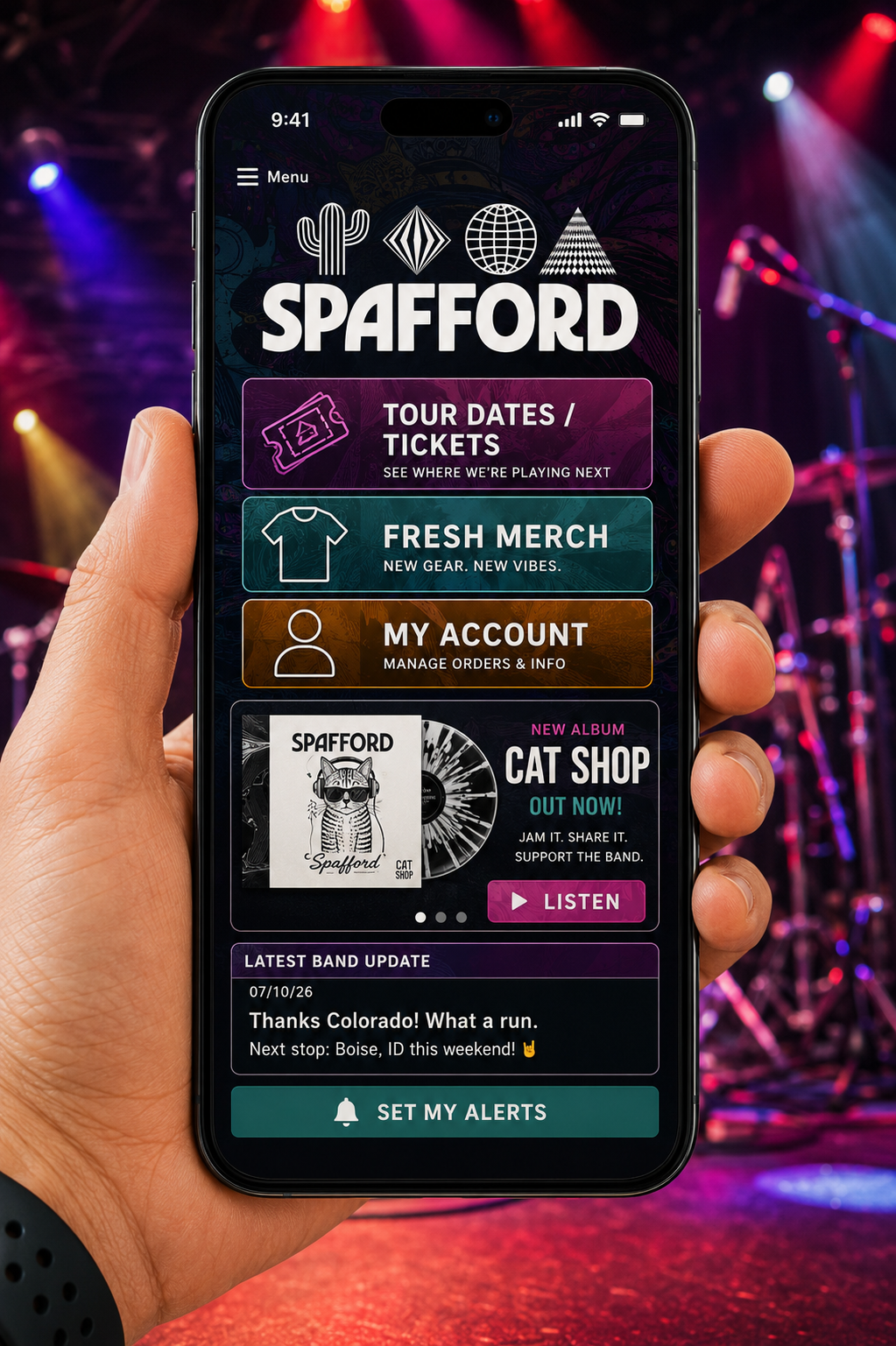
Their success grows when people return, renew, reorder, subscribe, attend another event, schedule another appointment, or remain part of a community.
A winery relies on club members and returning visitors.
A fitness studio relies on members who continue showing up.
A performer relies on fans who attend future shows.
A salon relies on recurring appointments.
A pub relies on regulars who care about changing menus, entertainment, and events.
These businesses do not complete the customer relationship with one transaction. They benefit every time the relationship continues.
2) They already have an interested audience
Most small businesses considering an app are not starting from zero.
They may have an email list, loyalty program, club, social following, event audience, website traffic, or steady stream of in-person customers.
If one of your existing channels already drives meaningful engagement, some of those customers may welcome a more permanent connection to your brand.
If your customers already care, your app gives them another way to act on their interest.
3) They regularly provide new reasons to return
A useful app is not simply a logo occupying space on a phone. It helps customers do something they value.
That might include:
Checking upcoming shipments or releases
Seeing events, classes, performances, or schedules
Accessing member benefits
Booking an appointment or reservation
Receiving updates about specific interests
Viewing new products/services or special offers
Managing their customer account
Finding information without searching through old messages
Businesses with active sales, service, event, or merchandising calendars are often particularly good candidates. They already create recurring value.
An app can make that value easier to find.
What an App Adds to a Lean Marketing Stack
A branded app typically won’t replace your website, email, SMS, or social media.
Each channel serves a different purpose.
Your website helps people discover and evaluate your business.
Email provides room for stories, newsletters, receipts, and detailed announcements.
SMS can be useful for selective, time-sensitive communication.
Social media helps people observe your brand and participate in public conversation.
A branded app gives loyal customers one-click access to their accounts, members-only product drops/discounts, and a simple summary of all messages they’ve received from you.
The differences between marketing channels matter:
Emails get buried.
Social posts disappear into feeds.
Text messages must be used carefully.
Customers may not remember to revisit a website.
An installed app remains available for one-click access from your best customers’ phones.
The goal is not to force every customer into the app.
The goal is to offer your most engaged customers another useful choice.
Some Brands Have Even More Reason to Explore Progressive App Marketing
Businesses offering regulated products, services, or content can face additional barriers when using mainstream marketing channels.
Cannabis brands, licensed gaming businesses, and adult-content creators may encounter restrictions from native app stores, SMS providers, mobile carriers, advertising platforms, and social networks.
Progressive App Marketing does not allow a business to avoid licensing requirements, age restrictions, privacy obligations, or other laws. And it should never be used to evade legitimate safeguards.
But for a lawful business whose access to native apps or commercial messaging is limited, a progressive web app (PWA) may offer another permission-based way to serve customers who want to stay connected.
For these businesses, Progressive App Marketing may be more than a convenient addition to the marketing stack.
For regulated businesses, Progressive App Marketing addresses an important need.
When an App Probably Does Not Add Much
There are a few straightforward exceptions:
A mobile app may offer limited value when a business primarily handles one-time or emergency transactions. Someone searching for a tow truck or emergency locksmith is usually trying to solve an immediate problem, not begin a continuing brand relationship.
An app may also struggle when the business has no existing audience to invite or provides no recurring information, service, access, or benefit.
Finally, someone must keep the experience useful.
That does not require a large team. A disciplined small business with a working marketing calendar may be better prepared than a larger company with scattered responsibilities.
But an abandoned app will not strengthen any relationship.
These exceptions are about the nature of the business model – not whether the business has reached some arbitrary level of marketing sophistication. Different problems require different tools to fix.
The Bottom Line
A branded app is worth exploring when:
Repeat customers matter to your business
You already have an audience that wants to stay connected
You regularly provide useful reasons for people to return
Your team can make the app part of an existing marketing or service calendar
If that describes your business, you may be closer to launching a useful branded app than you think, because you already have the essential ingredients.
The next step is to identify the customer relationship your app should support and the value that would make people want to keep it on their phones.
Progressive App Marketing is not about giving small businesses another place to send promotions.
It is about giving loyal customers a permanent, useful place to continue a relationship they already value.

ABOUT THE AUTHOR

Bryan St. Amant, Founder & CEO of VinterActive
Bryan St. Amant is the founder and CEO of VinterActive and earned an MS in Business Management from MIT and a BS in Mechanical Engineering from UC Berkeley. He’s led marketing teams for tech industry giants and built AI systems for governments and small businesses. His research on best practices has helped thousands of brands worldwide. His award-winning work has been featured in CFO Magazine, Inc., CNN Money, Integrated Direct Marketing, Direct Marketing Association, Oregon Wine Symposium, Wine Marketing Report, Wine Business, and the Wine Industry Network.